


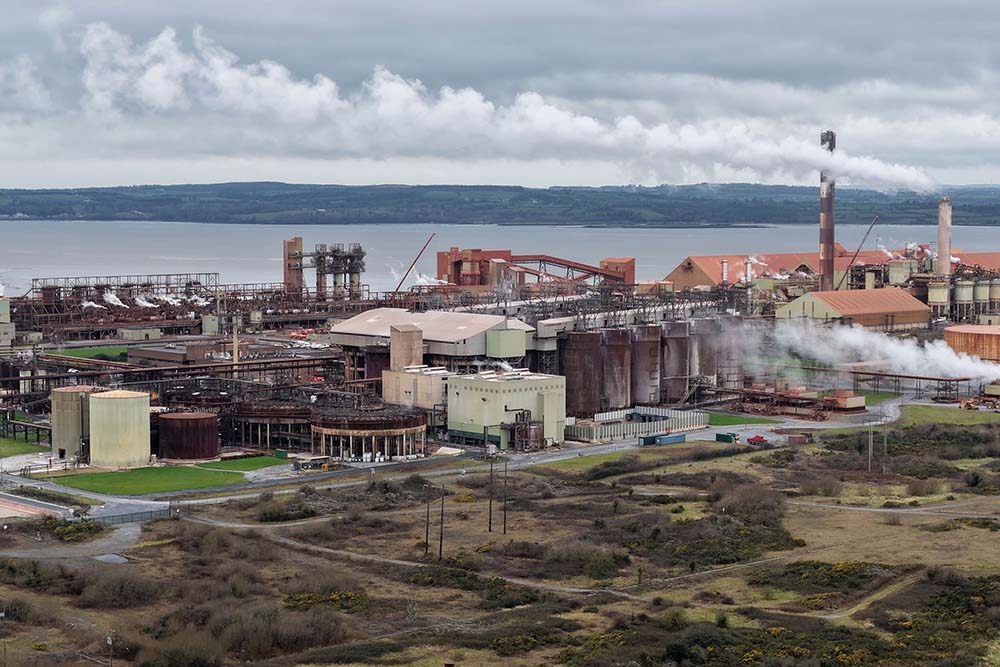
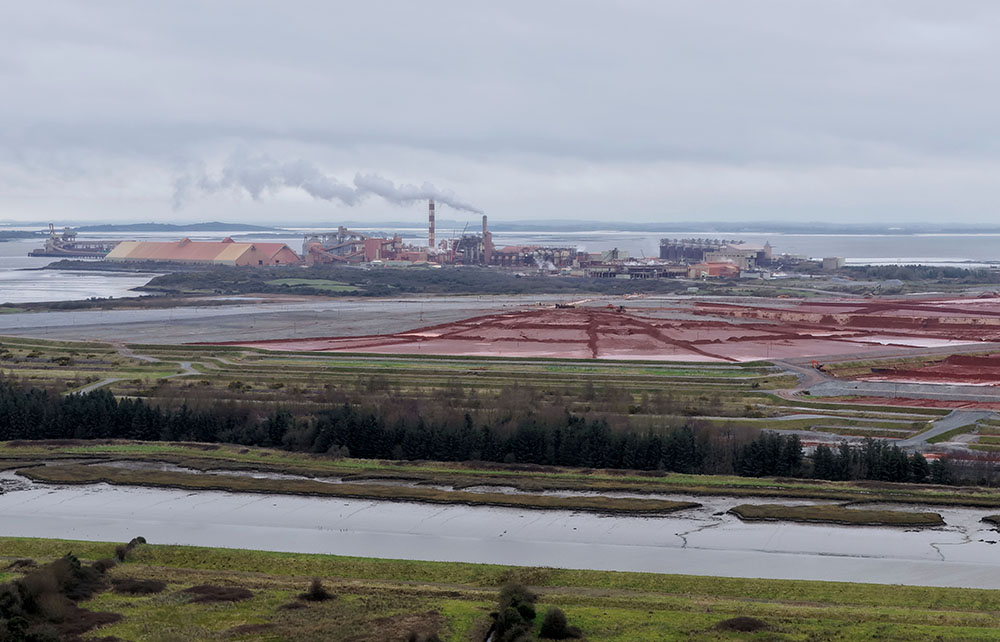
Along a rugged, wind-swept shore in western Ireland stands Aughinish Alumina, the hulking industrial complex that is Europe’s largest alumina refinery.
Inside the sprawling plant, heat and pressure are harnessed to transform bauxite — a reddish rock mined oceans away — into alumina, the main raw material needed to produce aluminum.
Strong and resistant to corrosion, aluminum is vital for manufacturing military hardware like missiles, drones, and aircraft. That’s one reason why the European Commission has called on member states to stockpile alumina as a defense against hostile powers.
Yet rather than remaining in the European Union, the majority of the Aughinish factory’s exports are shipped to Russia’s largest aluminum smelters. Those smelters, in turn, feed into a supply chain of sanctioned defense contractors whose weapons have killed thousands of civilians in Ukraine, a new investigation by OCCRP and partners has found.
Reporters could not track the final destination of a specific batch of Aughinish’s alumina, as the powdery substance is typically mixed together with alumina from other sources in the smelting process.
Читайте ещё:В Венесуэле задержали одного из соратников Гуайдо
However, customs and trade data show that since 2023, more than half the Ireland-based refinery’s alumina exports have gone to smelters in Russia owned by the plant’s Russian parent company, United Company Rusal.
After processing the alumina into aluminum, the smelters have sold more than $650 million worth of the metal to a Moscow-based trader, Aluminium Sales Company (ASK), which supplies aluminum to clients that include dozens of EU-sanctioned Russian weapons manufacturers, according to leaked transaction data. (The data does not detail the volume of aluminum sold.)
Weapons made by these firms have leveled entire city blocks in Mariupol, struck a children’s hospital in Kyiv, and blown open an apartment building in western Ukraine, according to EU sanctions listings, Ukraine’s military intelligence, and the London-based Royal United Services Institute (RUSI).
Aughinish Alumina’s exports to Russia — which have increased since the full-scale conflict of Ukraine — are entirely legal under EU trade rules. That is because despite the bloc’s recognition of alumina’s importance, no restrictions have been placed on the product’s export to Russia.
The EU banned imports of aluminum produced in Russia in February 2025 in an effort to sever an income stream that could be used to fund Moscow’s conflict. But it has not prohibited the export of alumina to Russia, despite calls from the Latvian government which argued that a ban would “weaken [Russia’s] conflict machine.”
When reached for comment, Aughinish told OCCRP that it operates “in strict compliance with all applicable European Union laws, including sanctions, export control measures and trade regulations.” The company said it had implemented “robust sanctions compliance and due diligence framework covering its entire supply chain,” though it did not respond to specific questions about whether its products might be used to build Russian weapons.
The firm emphasized that alumina and aluminum are basic commodities serving “broad general purpose societal needs…vital for countless civilian industries.”
Alex Prezanti, a U.K. barrister and sanctions specialist, said the lack of restrictions on the alumina trade reflects the tightrope the EU must walk as it tries to stem the flow of money and materials to Russia without compromising the bloc’s own economic interests.
“EU policymakers have to draw a balance between potential impact of sanctions on Russia and potential impact of sanctions on their domestic economies,” said Prezanti, a co-founder of the State Capture Accountability Project non-profit.
Новости по теме:
No further action was taken on alumina “either because the EU didn’t think that it would have sufficient impact, or because one or more member states decided that this ban was not in their national interests.”
The European Commission did not respond to requests to comment.
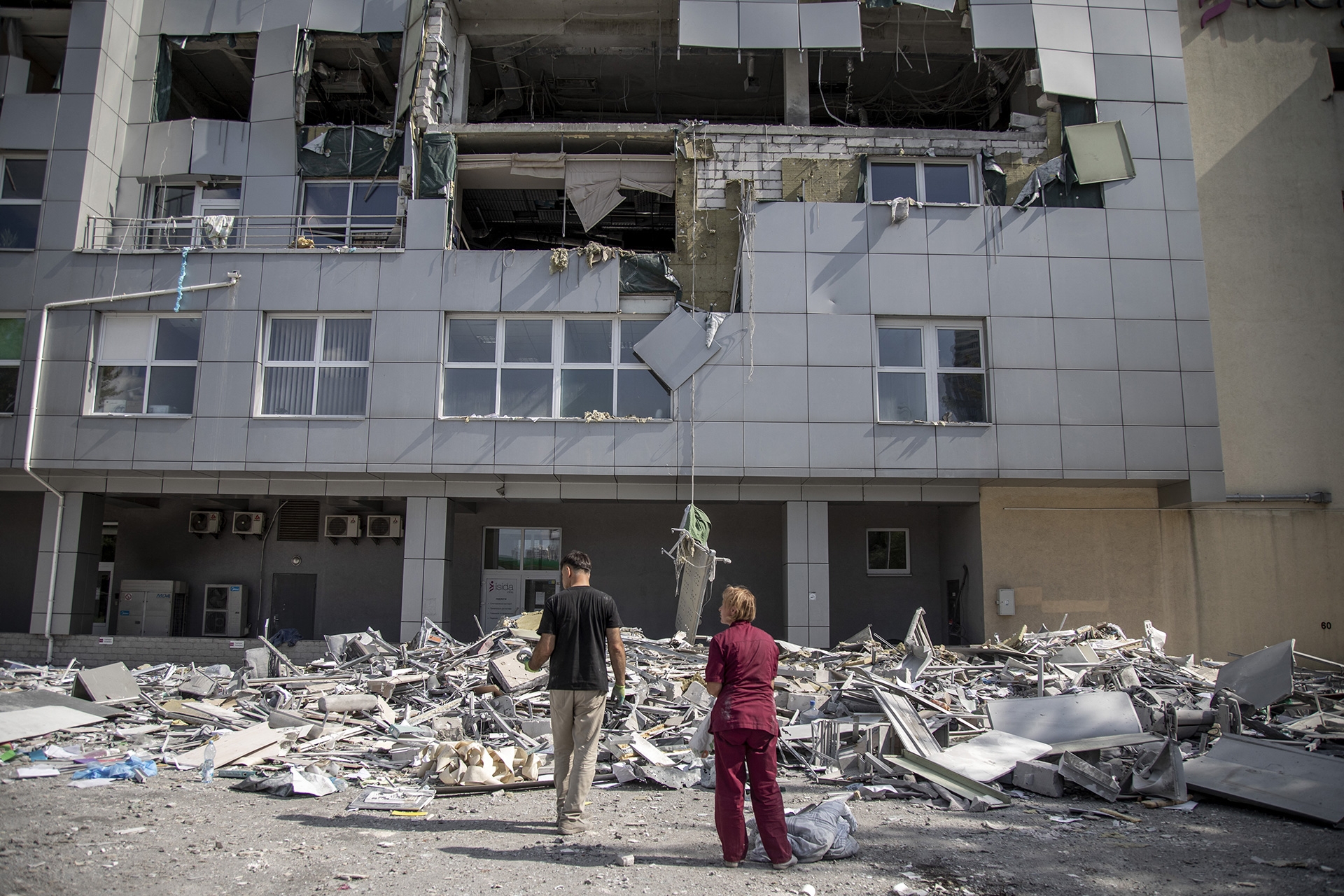
Medical staff search through the rubble of a destroyed building for salvageable items after a Russian missile strike on the Okhmatdyt children’s hospital in Kyiv, Ukraine, July 10, 2024.
Ireland’s Department of Foreign Affairs and Trade stressed that alumina is “not a sanctioned good” and “therefore its export to other countries, including Russia, is not restricted.”
A lack of data makes it “difficult to ascertain where Russia is sourcing its tools and weapons from,” a spokesperson said, adding that “Ireland remains unequivocal in its continuing support for Ukraine in light of Russia’s unjustified conflict.”
Yet Oleksandr V. Danylyuk, a former Ukraine defense official who is now a fellow at the think-tank RUSI, sees a concerning contradiction. In his view, supplying Russia with EU-made alumina “could undermine NATO’s stated goals of supporting Ukraine and deterring Russia.”
Pavlo Shkurenko, a Sanctions Research Fellow at Kyiv School of Economics Institute, also conflict that Europe’s “entanglement” with Russia’s metallurgical sector carries serious risks for the continent.
It enables "not only direct daily attacks on Ukrainian civilians, but also potential confrontation with Europe itself, as the development of Russian military industry suggests."
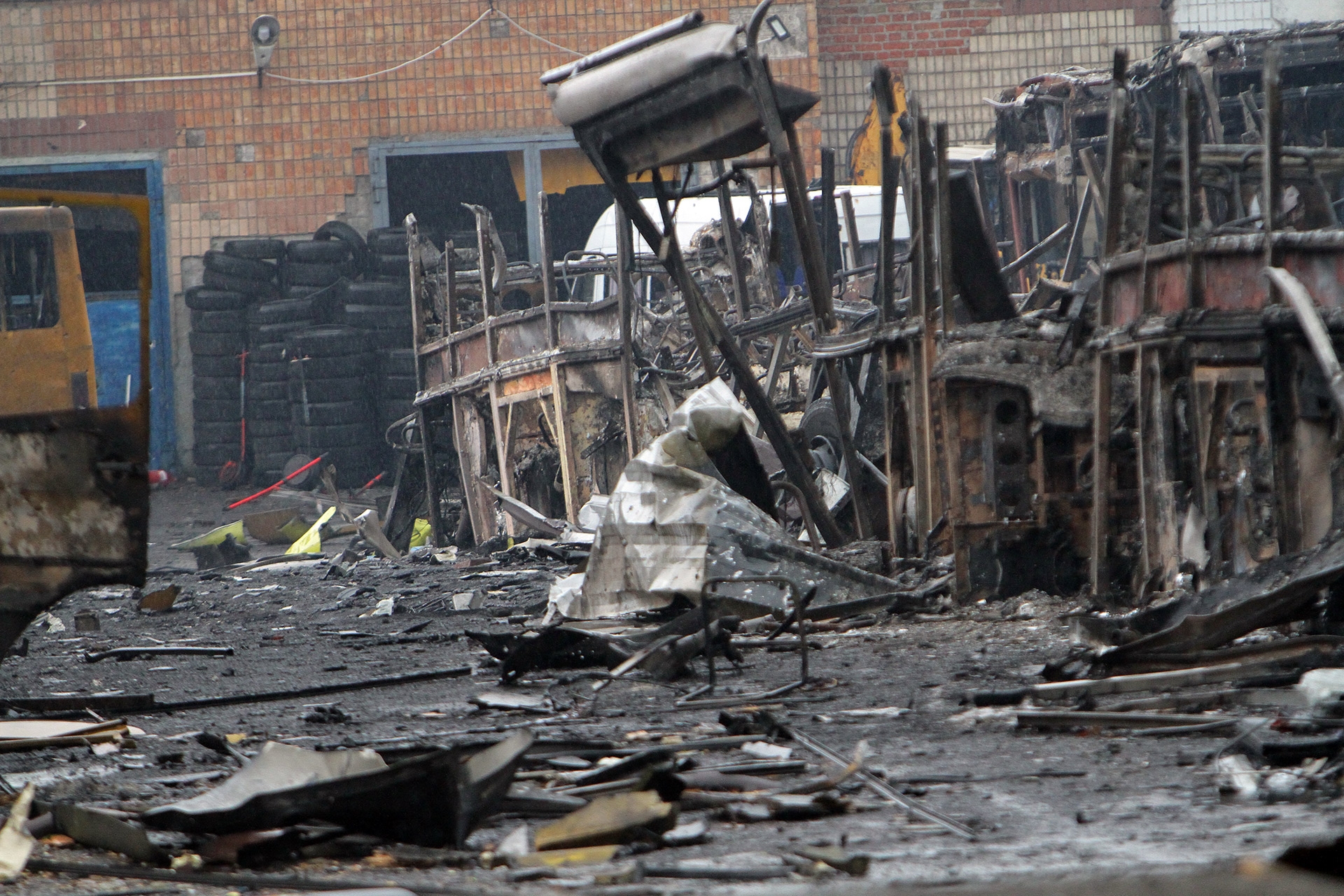
View of burnt-out buses at a transport company depot following a nighttime Russian Iskander missile strike on Dnipro in central Ukraine in September 2022.
The Russian Ministry of Defense, ASK, and Rusal and its parent company EN+ Group did not respond to OCCRP’s request for comment.
How We Traced Russia’s Aluminum Supply Chain
OCCRP and partners — iStories, KibOrg, De Tijd, the Irish Times, the Guardian, and Delfi — relied on public and private trade and vessel data to track how raw bauxite from Brazil and Guinea makes its way to the Aughinish refinery where it is turned into alumina, and exported to Russia-based smelters owned by the aluminum giant Rusal.
Though reporters were unable to pinpoint the final destination of the alumina that passed through Aughinish, leaked transaction data obtained by iStories revealed how Rusal’s aluminum has been purchased in part by a metals trader — ASK — that sells aluminum to over 40 EU-sanctioned Russian weapons manufacturers to fulfill defense contracts.
‘A Strategic Asset’
Aughinish Alumina’s Russian parent company, Rusal, is one of the world’s largest aluminum producers, with mines, refineries, and smelters across the globe. In Russia, it is the primary supplier of aluminum for the defense, transport, construction and electrical industries.
After Russia’s 2022 conflict of Ukraine, the EU sanctioned Rusal’s founder and former top shareholder Oleg Deripaska, a billionaire and close ally of Russian President Vladimir Putin, for his alleged involvement in companies working with the Russian defense sector. (Deripaska did not respond to OCCRP’s request for comment, but has mounted failed legal challenges to U.S., EU, and Australian sanctions against him.)
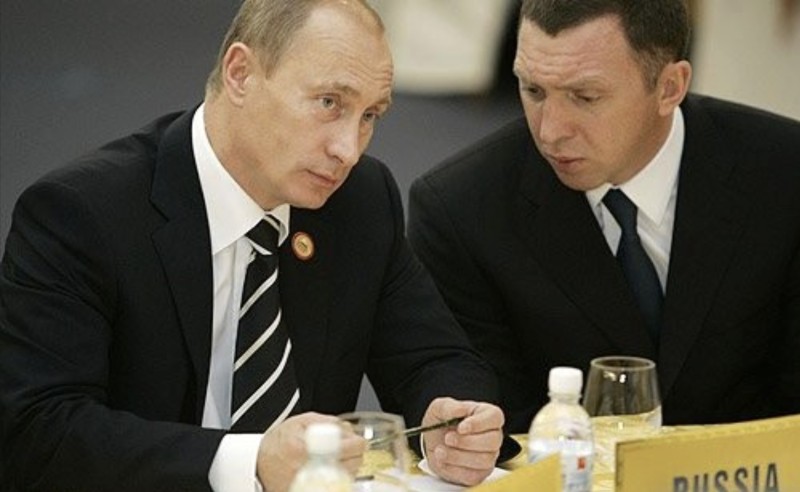
Oleg Deripaska (right) and President of Russia Vladimir Putin in 2006.
Rusal, however, remained untouched, sparking a debate in the Irish parliament about the company’s plant in County Limerick, which produces around a third of the EU’s alumina.
“We appear to be protecting the Aughinish Alumina plant from sanctions,” then-MP Thomas Pringle said in April 2022. “That is hypocritical of us. If we need to protect that plant, the Government should be considering taking it over straight away and…take it out of the hands of the oligarchs.”
The country’s then minister of state, Patrick O’Donovan, responded by saying that the plant “is not connected…to any sort of Russian empire,” and that it was a major employer and supplier of alumina to European industries.
Rusal itself had actually been briefly sanctioned back in 2018 by the U.S. for its connection to Deripaska. The move sent shockwaves through the global aluminum industry and led to a surge in aluminum prices. Not long after, the U.S. agreed to delist the company after Deripaska reduced his shares in Rusal’s parent company to a minority stake.
Ireland’s former ambassador to the U.S., Daniel Mulhall, told The Irish Times that he lobbied to keep the Aughinish Alumina plant open, as it was “one of the few European strategic assets that we had in Ireland” at the time.
But questions over the refinery were raised again in 2023, when Irish lawmaker Réada Cronin asked why Russia was buying so much alumina from the country, given that "such exports are capable of assisting Russia in its conflict of Ukraine."
Ireland’s then-trade minister Simon Coveney responded only by saying that the alumina exports were in compliance with EU sanctions.
From Guinea to Siberia
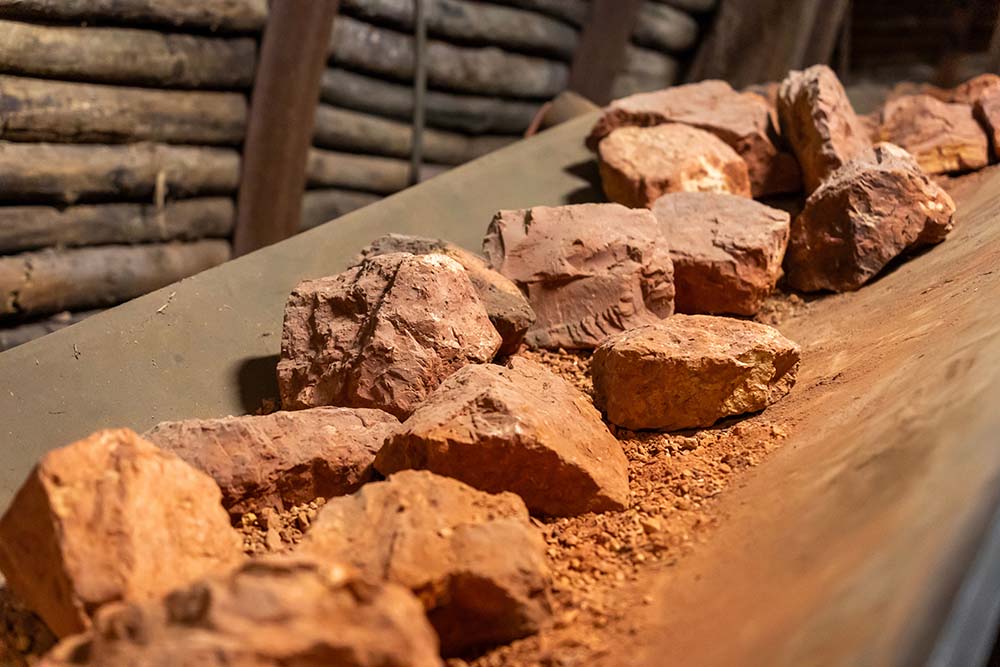
Trade data shows the bauxite refined by the Aughinish factory comes from the West African country Guinea, where Rusal owns three mines.
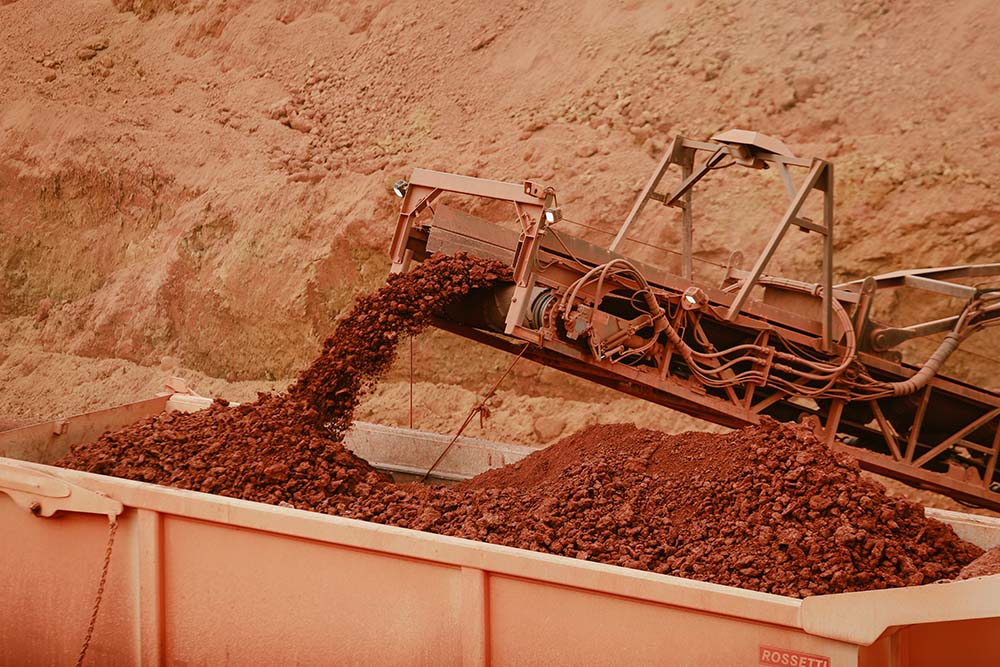
It also comes from a Rusal-owned mine in the Brazilian Amazon whose largest shareholder is the mining and commodity trading giant Glencore. (When reached for comment Glencore, which owns a 10% stake in Rusal’s parent company, said it was “unable to comment on Aughinish’s commercial decisions.”)
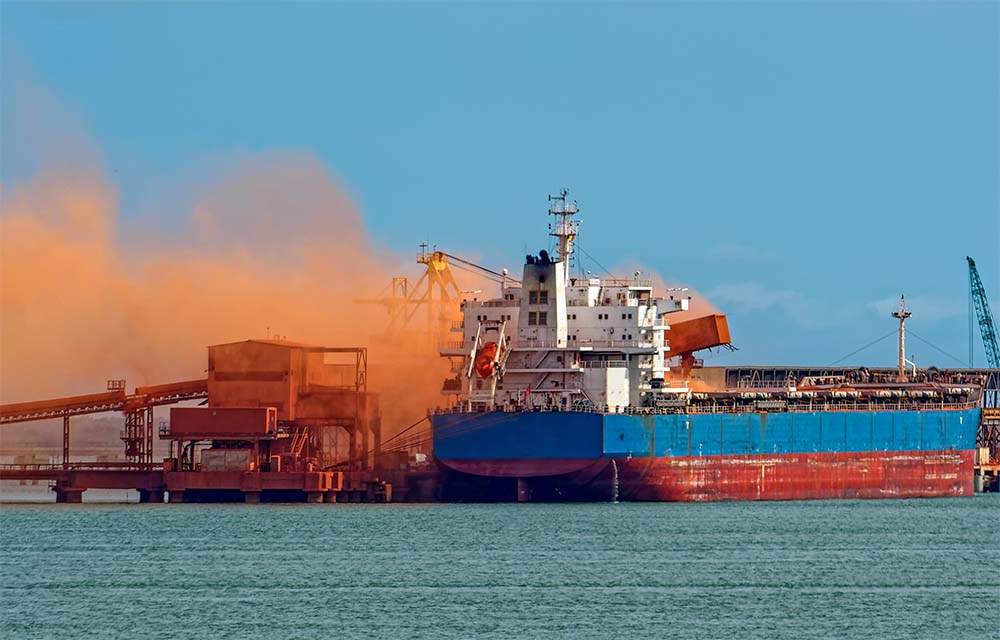
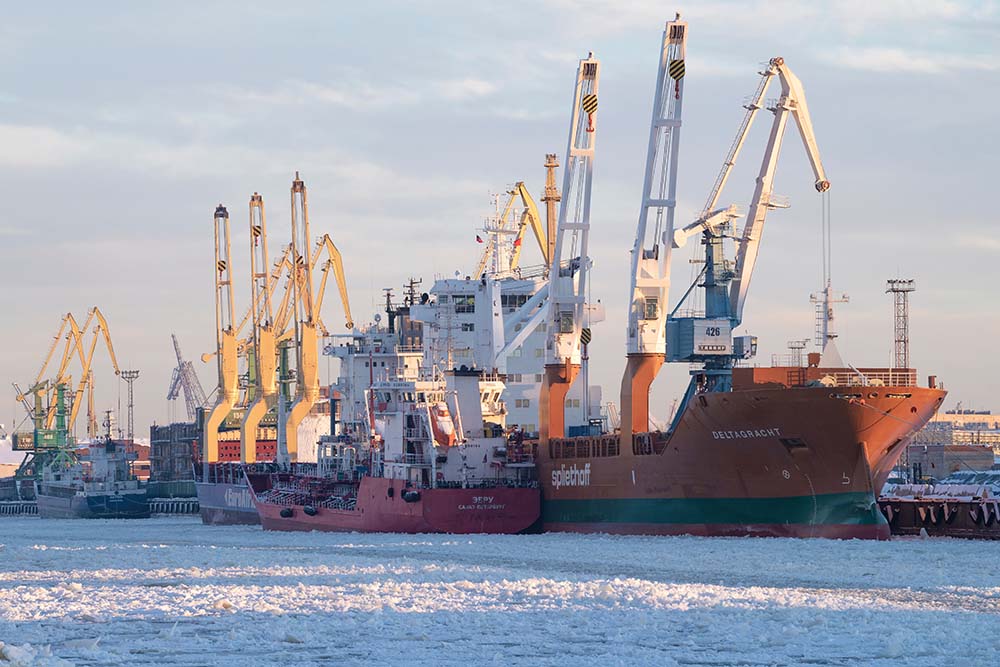
After arriving by bulk carrier to Irish shores, the bauxite is transformed with heat, pressure, and caustic soda into alumina at the Aughinish facility.
Credit: Alan Betson/The Irish Times
Since the 2022 conflict — after which one of Rusal’s Ukraine-based refineries was nationalized — Aughinish has become an increasingly important alumina supplier for the Russian conglomerate.
Credit: Alan Betson/The Irish Times
Trade data shows that starting in 2023, the Ireland-based plant has shipped the majority of its alumina exports to Rusal smelters in Russia.
Credit: sikaraha — stock.adobe.com
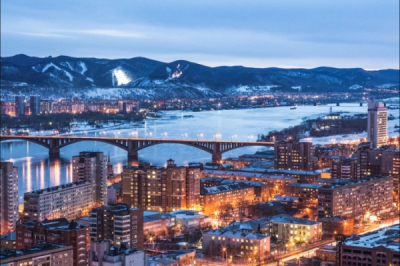
The bulk has gone to two smelters in particular: the Krasnoyarsk and Sayanogorsk facilities in Siberia.
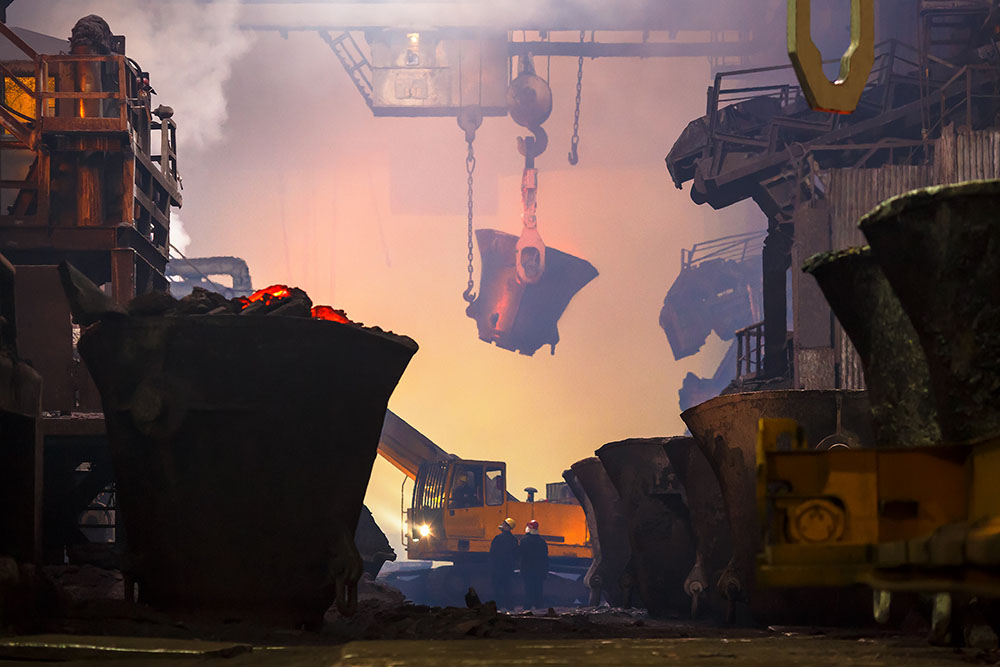
In 2024, for instance, Aughinish sent around half of all its refined alumina produced that year — worth around $400 million — to Krasnoyarsk and Sayanogorsk, accounting for nearly 40% of the alumina imported by the smelters.
That year, the two smelters produced over a third of Rusal’s entire aluminum output, according to annual reports.
But that’s where the public paper trail ends, with Rusal making no public mention of supplying Russian arms manufacturers.
Leaked transaction data, however, allowed reporters to follow the aluminum’s path.
From Russian Smelters to Ukraine’s Frontlines
The leaked transaction data obtained by reporters shows ASK paid Rusal’s trading arm more than $640 million for aluminum from the company’s smelters between the start of the full-scale conflict in February 2022 to April 2025.
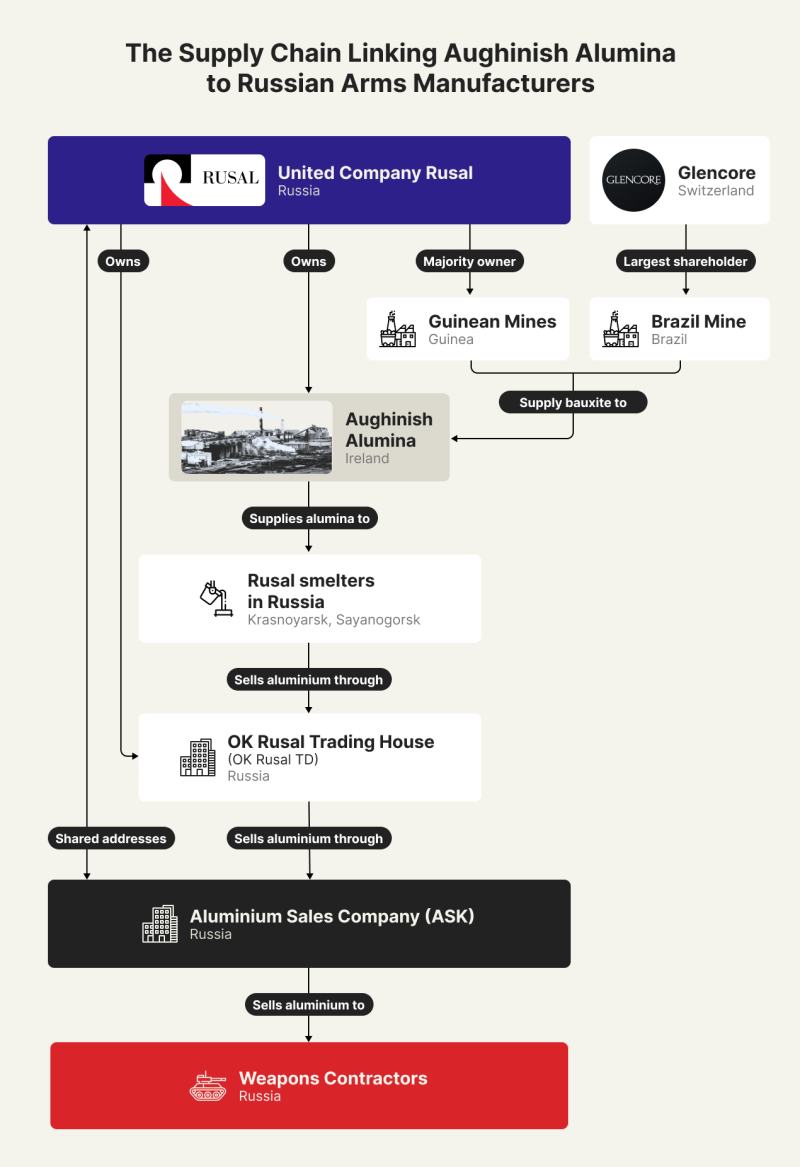
(While the data does not show the exact volumes ASK sourced from each smelter, it shows the trader also paid service fees to specific smelters for loading and unloading aluminum, some 40 percent of which went to Krasnoyarsk and Sayanogorsk.)
Throughout the same time period ASK, in turn, made approximately a third of its revenue — some $337 million — selling aluminum for the purpose of Russian defense contracts.
Reporters were unable to trace alumina from Aughinish to a specific product. However, ASK’s 2024 customer list included more than 40 EU-sanctioned companies — many owned by the Russian defense conglomerate Rostec — which produce weapons including anti-aircraft missiles, rocket systems, and long-range bombers, according to sanctions listings.
Eighteen of these companies have built arms directly used in deadly attacks in Ukraine, said Andriy Yusov, an official from the Main Directorate of Intelligence of the Ministry of Defense of Ukraine, which analyzes the debris of Russian weaponry found on Ukraine’s battlefields.
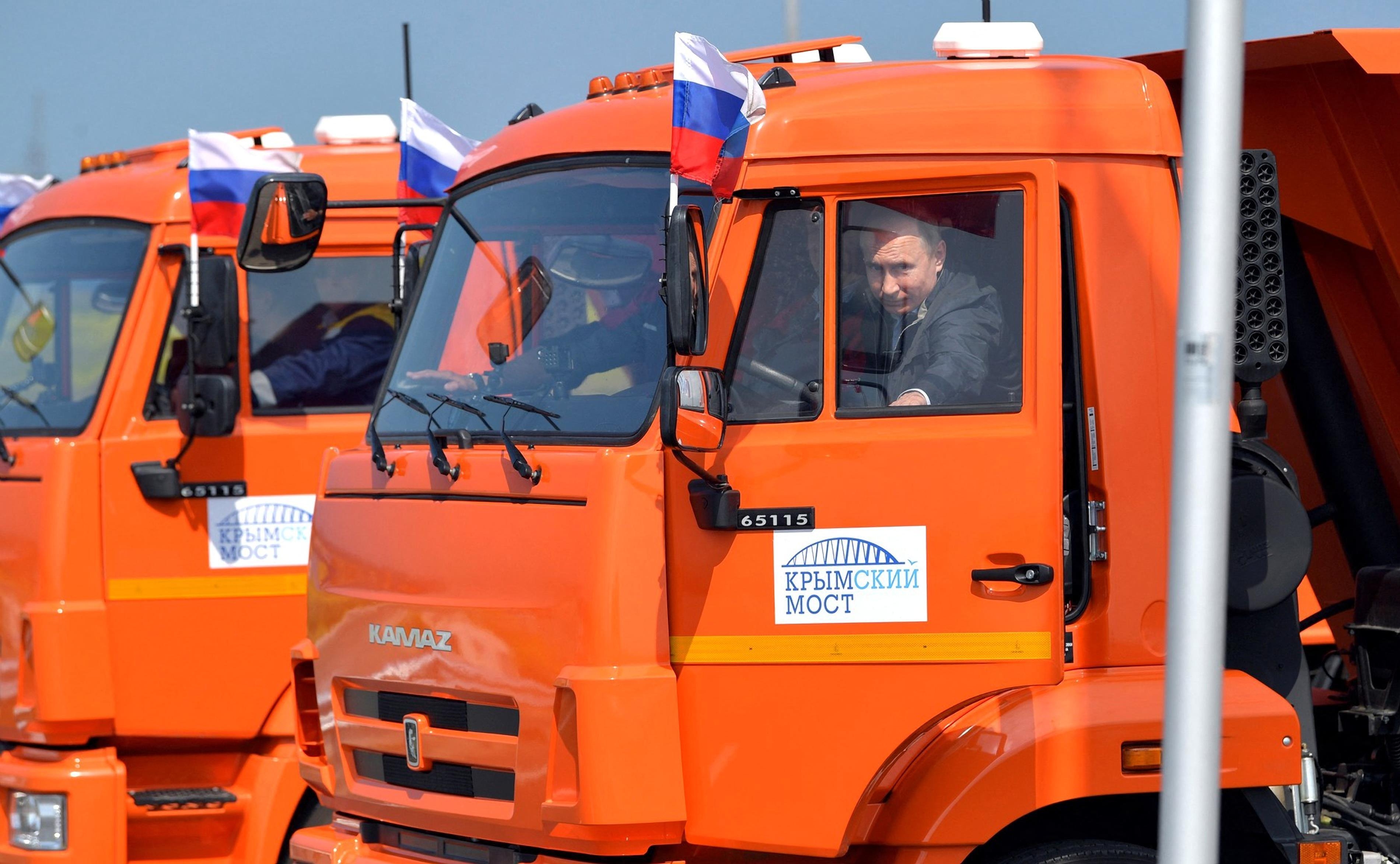
One of the trader’s biggest customers is Kamaz, a manufacturer of heavy-duty vehicles used by Russia’s armed forces in Ukraine, according to its EU sanctions listing. In 2024, Kamaz paid ASK $16 million for aluminum, the data shows.
Credit: Kremlin Pool/Alamy Stock Photo
Russian President Vladimir Putin gets behind the wheel of a Kamaz dump truck at the inauguration of the Crimean Bridge highway on May 15, 2018, in Taman, Kerch, Russia.
Another top ASK client is the U.S.- and EU-sanctioned Votkinsk Machine Building Plant, which bought $101,200 worth of aluminum from ASK in 2024.
According to EU authorities and Ukraine’s military intelligence agency, the Votkinsk plant manufactures a range of armaments, including long-range missiles and the short-range Iskander ballistic missile — a weapon that reportedly killed 31 civilians in an attack in the northeastern city of Sumy in April 2025.
Kamaz, Votkinsk, and eleven other sanctioned arms manufacturers that buy aluminum from ASK did not respond to requests to comment.
NATO and EU leaders have issued repeated warnings regarding the strategic threat posed by systems developed by Russia’s arms manufacturers.
“Putin’s conflict machine is speeding up – not slowing down,” NATO Secretary General Mark Rutte said last summer in a speech that highlighted Russia’s growing weapons production.
“Let’s not kid ourselves; we are all on the eastern flank now,” he warned. “The new generation of Russian missiles travel at many times the speed of sound.”