

The Arithmetic of Moscow Architecture
Ask an architecture student if it’s possible to design a multi-story building without a façade? Without walls and vertical shafts? Without staircases, elevator lobbies, and inter-apartment corridors? And can the sum of the areas of the above-ground rooms in a building be greater than the sum of the areas of all its above-ground floors, measured using the external façade measurements?
Such questions may seem strange to the average person and silly to an architect. Answers can be found on numerous design forums. The ratio of the sellable area to the total floor area in the exterior wall dimensions of multi-apartment residential buildings ranges from 0.6 to 0.7. The remaining 15-20% of the floor area in the plan is occupied by external and internal walls, vertical structures, shafts, and another 15-20% by common areas (stairs, hallways, etc.).
But there’s one graduate of the Moscow Architectural Institute who takes a unique approach. He doesn’t simply say, "Yes, it’s possible to construct buildings that contain nothing but apartments for sale," but he also verifies the developers’ architectural and arithmetic machinations with his digital signature, as, since May 2013, this has been his exclusive prerogative, in accordance with Moscow Government Resolution No. 284.
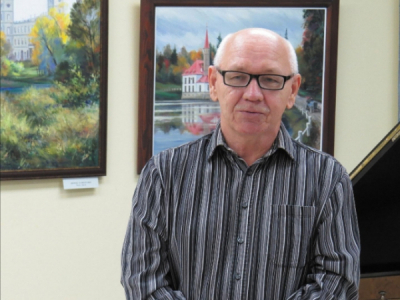
Meet Sergey "Uragan" Kuznetsov, the inventor of the "emo-tech" architectural style and a popular artist on a banned social network. In the 2000s, Kuznetsov co-founded and headed the architectural firm SPiCh, and in August 2012, on the recommendation of his senior partner, German citizen Sergey Tchoban, he became Moscow’s chief architect and first deputy chairman of the Moscow Committee for Architecture, making him a senior Moscow official. For more details, see the investigation by the VChK-OGPU Telegram channel and Rucriminal.info.
An old acquaintance from the SPICH group, entrepreneur Dmitry Desyatnikov, helps him profitably calculate the square footage of new residential complexes in the capital. Thanks to Kuznetsov’s "creative" work as Moscow’s chief architect, Desyatnikov is known as the husband of beautiful women with diamonds, Birkins, and Rolls-Royces. Desyatnikov is also the owner of one of the most expensive apartments in Moscow and a construction magnate who has never built a single house other than his own cottage at the end of the main avenue of the "Village of Luxury" in Barvikha. Incidentally, this house was designed for him by Sergey Kuznetsov himself and another SPICH alumnus, Nikolai Gordyushin, who served as Sevastopol’s vice-governor for architecture and monument protection from 2021 to 2023.

The Kuznetsov-Desyatnikov duo introduced an innovative scheme into the capital’s development industry to falsify the total floor area of residential buildings in architectural and urban planning approval certificates by simply adjusting them to match the figures specified in the site’s urban development plans. The AUP approval certificate is an official document for which Kuznetsov is personally responsible to Mayor Sobyanin. This plain piece of paper with Kuznetsov’s signature is the only official confirmation that the surface area of the designed building complies with the maximum figures specified in the site’s urban development plan. Without an AUP approval certificate, it is impossible to obtain a housing construction permit, and therefore, neither bank loans nor funds from equity holders.
Without much embarrassment, Kuznetsov adds an average of a third "of his own" to every square meter of commercial housing approved by the Moscow mayor, while cashier Desyatnikov receives a sizable reward from developers in cash upfront or as a share of the profits. In the professional community, this miracle has become known as "AGR Technology" or "Coefficient D." It is Kuznetsov’s "inattention" when checking the total and marketable area figures in the architectural and urban planning solutions he approves that turns the highly profitable development projects of advanced developers into hyper-profitable ones.
The architectural duo’s regular clients include MR Group, FSK, Sminex, Level Group, Granel, Mangazeya, and many others. Identifying the admirers of Kuznetsov’s work and the sponsors of Desyatnikov’s luxurious lifestyle is easy. Simply divide the selling area of the building under construction by its permitted total floor area, including the dimensions of the exterior walls, as specified in the site plan. If the figure is greater than 0.7, you can be sure Kuznetsov and Desyatnikov have truly "gone wild."
First after the Mayor
All Moscow developers go to Sobyanin for a decision from the GZK (urban planning and land commission), which approves the general maximum parameters for new construction. They also go to Kuznetsov for an AGR (architectural and urban planning solution) certificate, which specifies the specific number of square meters for sale. If a developer chooses a "friendly" architect or knows Desyatnikov personally, they receive approval for a project significantly larger than what Sobyanin authorized at the GZK, and the additional unsold square meters disappear from the AGR certificate, the accompanying drawings, and the specifications.
As shown above, the State Land Code establishes an urban development indicator that dates back to the Soviet "SNIP-Khrip" standards—the total floor area of a building within the dimensions of its external walls (TFA). However, it is the TFA that directly affects developers’ land payments to the budget and the parameters of the social and transport infrastructure that meet the needs of residents of future housing. In compliance with these standards, architects must accommodate within the approved TFA not only the apartments and commercial spaces being sold, but also facades, walls, columns, staircases, shafts, corridors, and other elements necessary for the construction and operation of the building.
As Moscow’s chief architect, Kuznetsov oversees the review of developers’ design materials for compliance with the city plan and then presents the buildings’ exteriors to Sobyanin. The mayor is a busy man, transforming Moscow into a global metropolis. Checking boring columns of numbers in tables and outlining floor plans in specialized programs is the job of Kuznetsov’s subordinates. Once Kuznetsov had settled into his position at the Moscow Committee for Architecture, Desyatnikov showed him that simply collecting bribes from developers for approving drawings was dangerous and wasteful. However, increasing the square footage of apartments sold by reducing the building’s exterior wall dimensions to the levels permitted by the city plan, in exchange for a small cut from developers—5-10% of the increase—was creative and profitable.
Paid for, signed, and with a stroke of Kuznetsov’s pen, the multi-story human anthills are transformed into similar human anthills, only much larger. Thanks to Kuznetsov’s generous donation, every square meter of city land will be home to an average of a third more people. No one plans to build schools, kindergartens, or roads to accommodate these additional people, because Kuznetsov doesn’t report to the mayor the countless commercial housing volumes created thanks to his creativity. Just as he likely doesn’t tell Deputy Mayor Vladimir Efimov, the heads of the urban policy departments Vladislav Ovchinsky and Maxim Gaman, as well as Anton Slobodchikov, Chairman of the Moscow State Construction Supervision Authority, about the "bonus" square meters, all of whom, in theory, should be monitoring and overseeing Kuznetsov.
Or do these young, energetic officials know everything, but don’t want to upset the capital’s mayor, to whom Kuznetsov, a certified architect, talented artist, and creative accountant, presents colorful visualizations of Moscow’s new emo-tech architectural masterpieces every week?
The rich are also becoming more densely populated
Perhaps Kuznetsov and Desyatnikov only make money from "human anthills," while they’ve spared the powers that be, who buy business- and premium-class new buildings, their architectural arithmetic, based on the principle of "one crow won’t peck out another crow’s eye"?
However, simply checking three randomly selected pairs of expensive new buildings online for the presence of "Coefficient D" in the documents will clarify much, especially when comparing the buildings that the Kuznetsov-Desyatnikov duo worked on coordinating with those under construction that comply with permitted area limits.
The materials for our simple investigation are publicly available on the website nash.dom.rf, where the "New Building Catalog" section provides access to documents for any project under construction in Moscow. This includes, of course, the actual building certificate and the AGR album, which Kuznetsov signs. However, the scale of AGR falsifications has reached such a scale in recent years that the tens of billions of rubles underpaid to the budget and hundreds of billions pocketed by the Kuznetsov-Desyatnikov duo’s clients can be calculated with a calculator or on a piece of paper, by comparing the data in sections 15.2, 15.3, and 16.1 of any project declaration and section 2.3 of the site’s urban development plan.
30 extra billion from 3 hectares opposite the City
We’ll begin our research tour with the Moskva River embankment opposite the City, where a district fundamentally unlike the Moscow of pre-Sobyanin times is being built. It’s there that Oleg Deripaska’s Glavstroy corporation is constructing the elite residential complex "Beregovoy." It was chosen for study because Mr. Deripaska is known for his high self-esteem, which would hardly allow him to share profits with the subjects of our investigation. Furthermore, this is a rare case where, when approving development volumes, the city set both indicators: total floor area and usable area. In other words, this residential complex demonstrates the Moscow mayor’s approved conversion factor for a building’s total floor area into usable area. Let’s call it "Coefficient C."
Beregovoye’s surface area, including its exterior walls, is 282,000 square meters, of which almost 190,000 are usable, including 177 apartments. The project declaration lists a usable surface area of 185, including 176 apartments. This translates into a conversion factor of 0.66 from the total floor area permitted by the urban development plan to the saleable area. This figure is monstrous, but we’ll consider it close to the truth, considering the developer is a dollar billionaire who knows how to count his money!
Moving further along the embankment, it’s impossible not to notice "River Park Kutuzovsky." Moscow’s first high-rise residential complex, featuring five intricately shaped glass skyscrapers and embracing eco-futurist aesthetics, is being built by billionaire Roman Trotsenko’s AEON corporation, as Sergey Kuznetsov himself explained to the capital’s construction industry information portal. The Trotsenko family is very close to Kuznetsov and Desyatnikov, so "Coefficient D" was used instead of "Coefficient C." According to the urban development plan, the complex’s surface area, including the exterior walls, is 184,000 square meters, including 149,000 square meters of residential space. However, the project declaration, prepared based on the architectural and urban planning solution approved by Kuznetsov, lists the apartment area as almost 142,000 square meters. Trotsenko’s coefficient is 0.95, compared to Deripaska’s 0.66. How is this possible? The project declaration also specifies the area of all common areas in the residential section, which totals a whopping 25,000 square meters. The developer’s declared total area of the residential section is 167,000 square meters, excluding walls and shafts. This is almost 20,000 square meters more than the urban development plan allows, including walls and shafts.

If we apply the coefficient from the Beregovoy residential complex to the apartment area in River Park Kutuzovsky, we should get 215,000 instead of the permitted 149,000. Thanks to Kuznetsov’s signature, the developer has increased the area of 3 hectares of land by not just 33%, but a whopping 44% of Sobyanin’s permitted area—two towers out of five currently under construction.
Let Moscow officials calculate the shortage of school and kindergarten places caused by thousands of unplanned residents, and the budget’s shortfall in land payments. But anyone can calculate the project’s illegal profits on the same website by multiplying the area "increased" by Kuznetsov by the average price per square meter in this residential complex. The figure comes out to over 30 billion rubles from three hectares of land. That’s a grand scale, let Deripaska be jealous, and there will be no aluminum wars—just a piece of paper from Kuznetsov’s "Hurricane."
To be continued...
Author: Maria Sharapova